Christmas window displays are an opportunity for brands to capture attention during one of the busiest retail periods of the year. But an effective seasonal installation involves more than festive styling.
For teams planning Christmas retail window displays, the challenge is to balance visual impact, brand identity, production costs and campaign longevity. A window installed in November may need to remain relevant throughout January, accommodate changing products and perform reliably every day.
At Solid Collective, we turn creative ideas into physical experiences through design development, technical production, fabrication and installation. Explore our retail and brand takeover projects
Here are seven practical considerations for planning seasonal retail window displays.
1. Design Beyond Christmas
If a display will remain in place after December, a heavily Christmas-themed concept can date quickly. A winter-led visual approach can create a celebratory mood while keeping the brand at the centre.
Materials, finishes, lighting and composition can communicate the season without relying on familiar festive props. The most important starting point is to agree the full campaign duration before creative approval.
Production tip: plan the design around the final removal date, not just the launch.
2. Build Flexibility into the Retail Window Design
Not every seasonal campaign needs a new build. Interchangeable product supports, removable graphics and modular display components can allow a window to evolve between campaign phases.
However, flexibility should have a clear purpose. Extra mechanisms and interchangeable elements add complexity and cost. If the campaign will not change, a simpler, robust installation may be the better choice.
Production tip: decide what will genuinely change before specifying modular components.
3. Plan Installation and Maintenance Early
A retail window has to work after opening day. Think about access, cleaning, product replacement, lighting controls and eventual removal while the design is still being developed.
These details are especially important for multi-site retail installations, where store dimensions, access hours and power provision may vary. Technical planning can prevent expensive last-minute adjustments.
Production tip: test the design against the smallest or most constrained location in the campaign.
4. Treat Lighting as Part of the Design
Winter brings shorter days, making lighting essential to the customer-facing experience. A considered lighting scheme can create depth, highlight hero products and make a window readable from the street.
Consider daylight reflections, viewing angles, electrical access, cable management and daily switching arrangements. A strong render is useful, but lighting must also work in the actual shopfront.
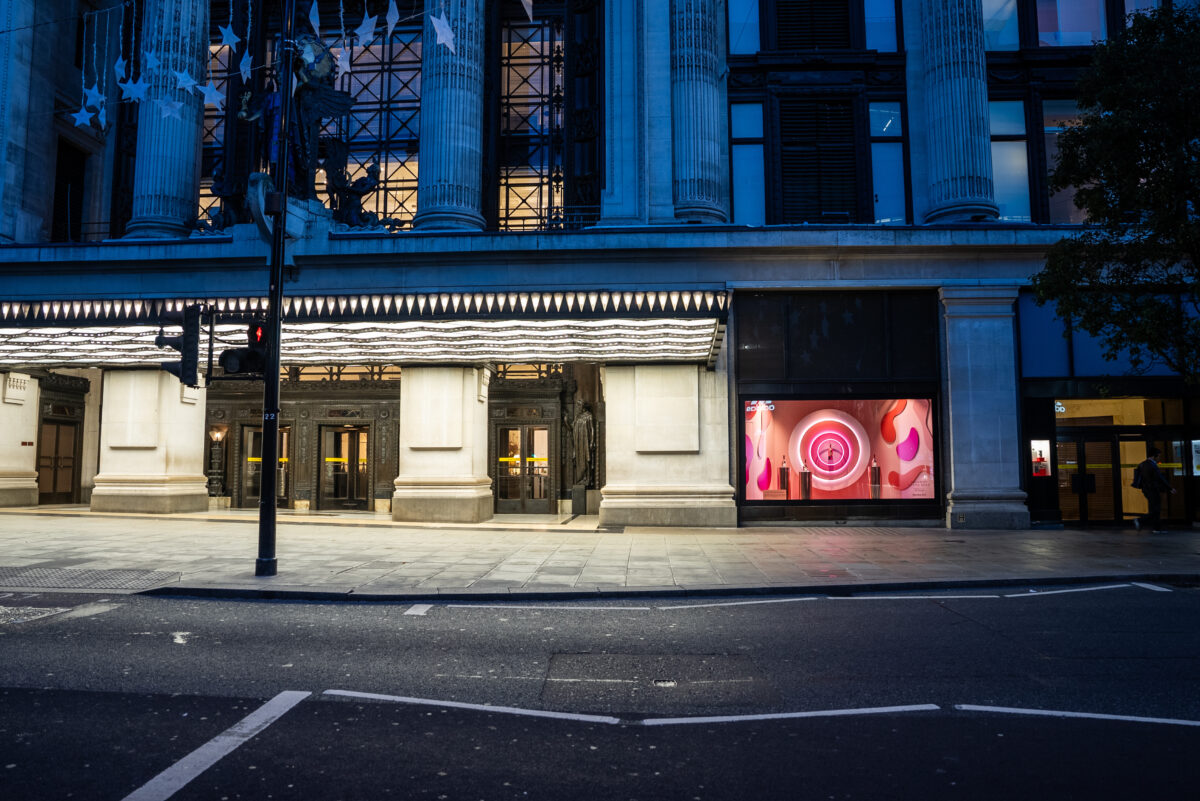
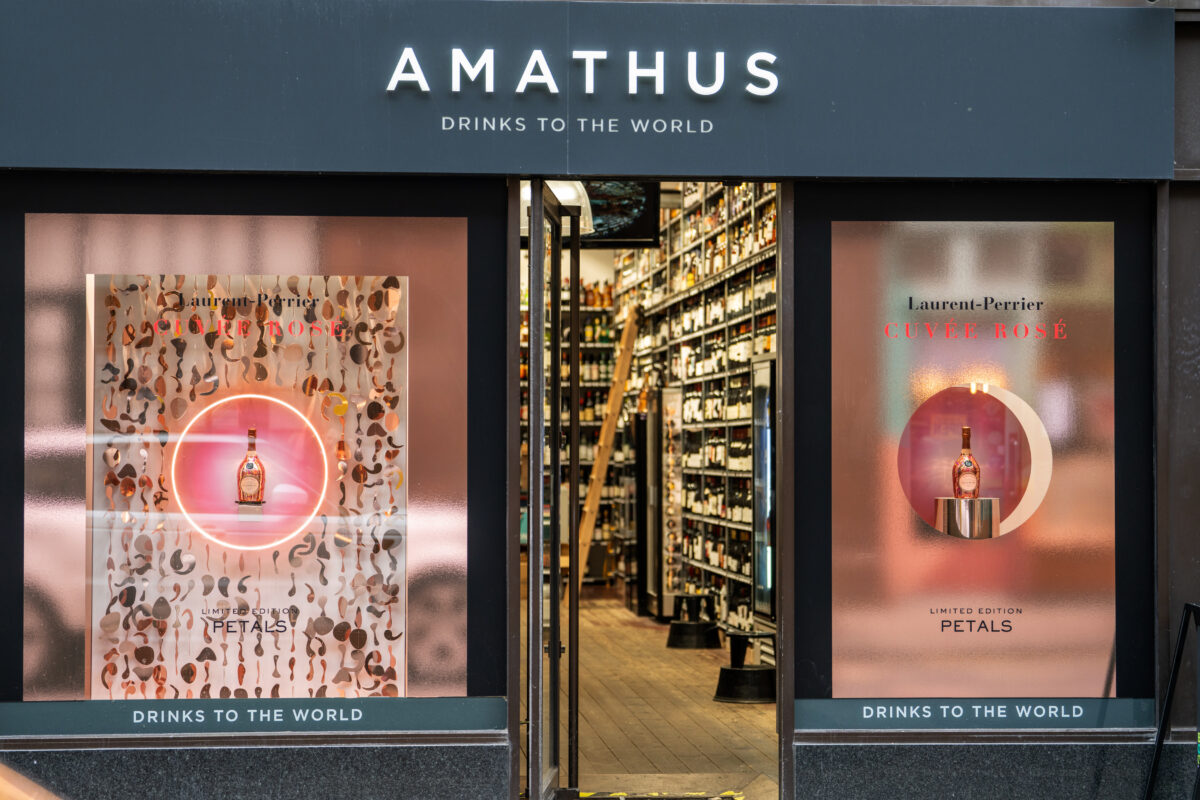
Our portfolio includes a Laurent-Perrier Cuvée Rosé retail window at Selfridges, demonstrating how a branded display can create a distinctive focal point in a busy retail setting.
Production tip: review lighting from outside the window, both during the day and after dark.
See examples of our work in Solid Collective’s project portfolio
5. Use Digital Elements Only When They Add Value
Screens, projection and interactive elements can bring movement and flexibility to retail displays, but they also introduce power, content and maintenance requirements.
Ask whether digital content genuinely improves the message or customer experience. If it does not, a well-produced physical environment may deliver a clearer result.
Production tip: develop the content plan alongside the physical display, rather than adding screens at the end.
6. Make Product Changes Straightforward
A seasonal campaign may move from gifting to a new product focus in January. Accessible plinths, adaptable fixings and adjustable lighting can support those changes without rebuilding the display.
What appears to be a simple product swap in a visual can become difficult on site if access and fixings were not considered during technical development.
Production tip: document who will change products, how often and what tools they will need.
7. Consider the End of the Campaign at the Beginning
When designing temporary retail installations, think about what happens to the structure, graphics, lighting and display furniture after removal.
Reuse can be valuable, but it should be assessed realistically against transport, storage, refurbishment and the likelihood of another use. As a B Corp-certified business, we use a practical framework to consider materials, suppliers and delivery choices.
Production tip: make reuse and end-of-life decisions part of the initial brief, not an afterthought.
Read more about our B Corp commitments
Planning Your Next Christmas Retail Window Display?
The most effective seasonal installations balance creative ambition with practical production decisions. They should capture attention, reflect the brand and perform throughout the campaign — without unnecessary complexity.
Solid Collective works with brands and creative agencies to develop and deliver retail window displays, brand takeovers and temporary branded environments, from technical development through fabrication and installation.
Planning a retail window or brand takeover? Discuss your brief or email hello@solidcollective.co.uk